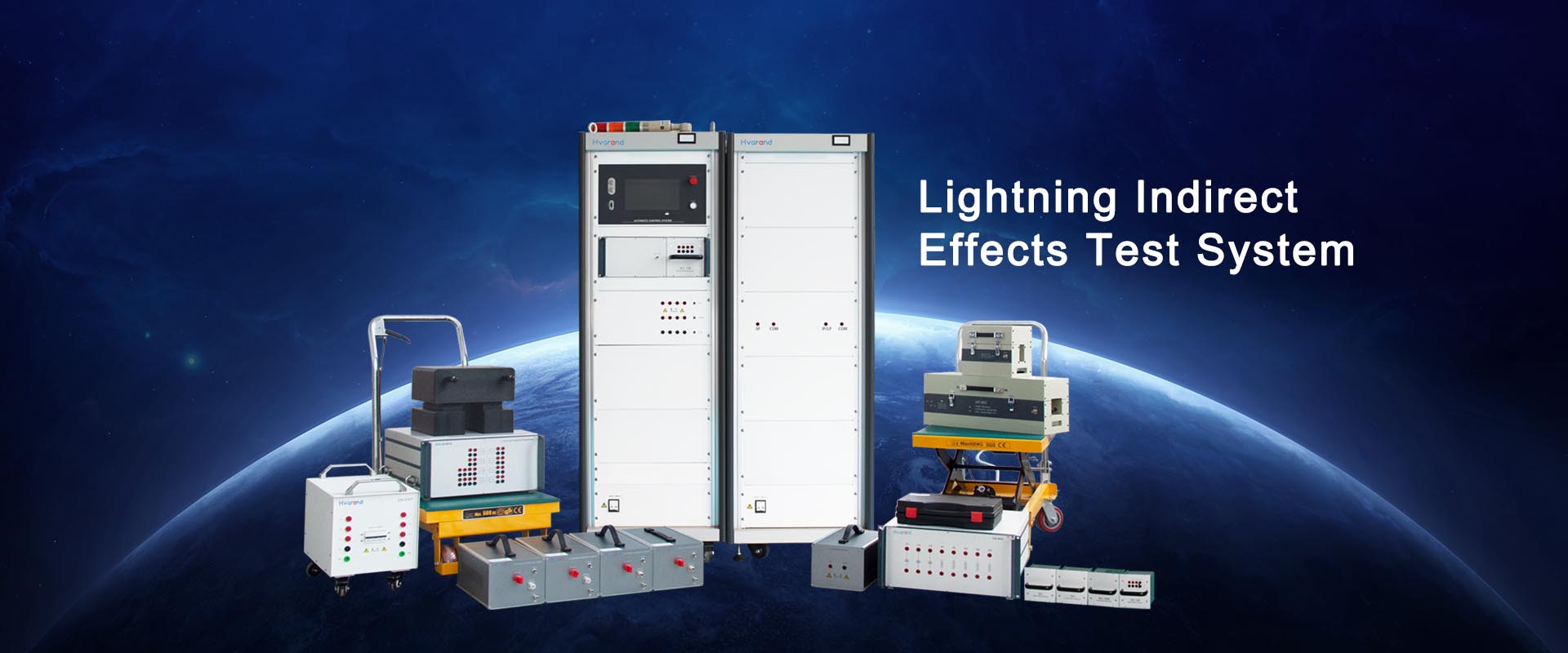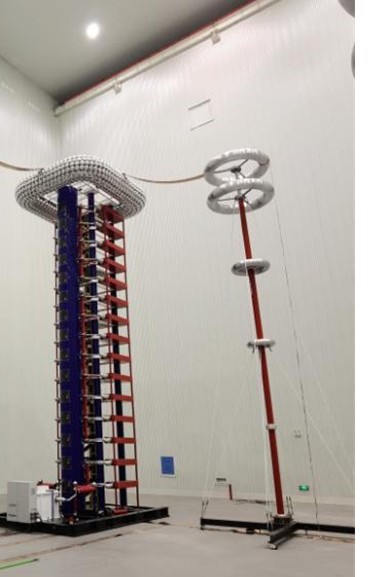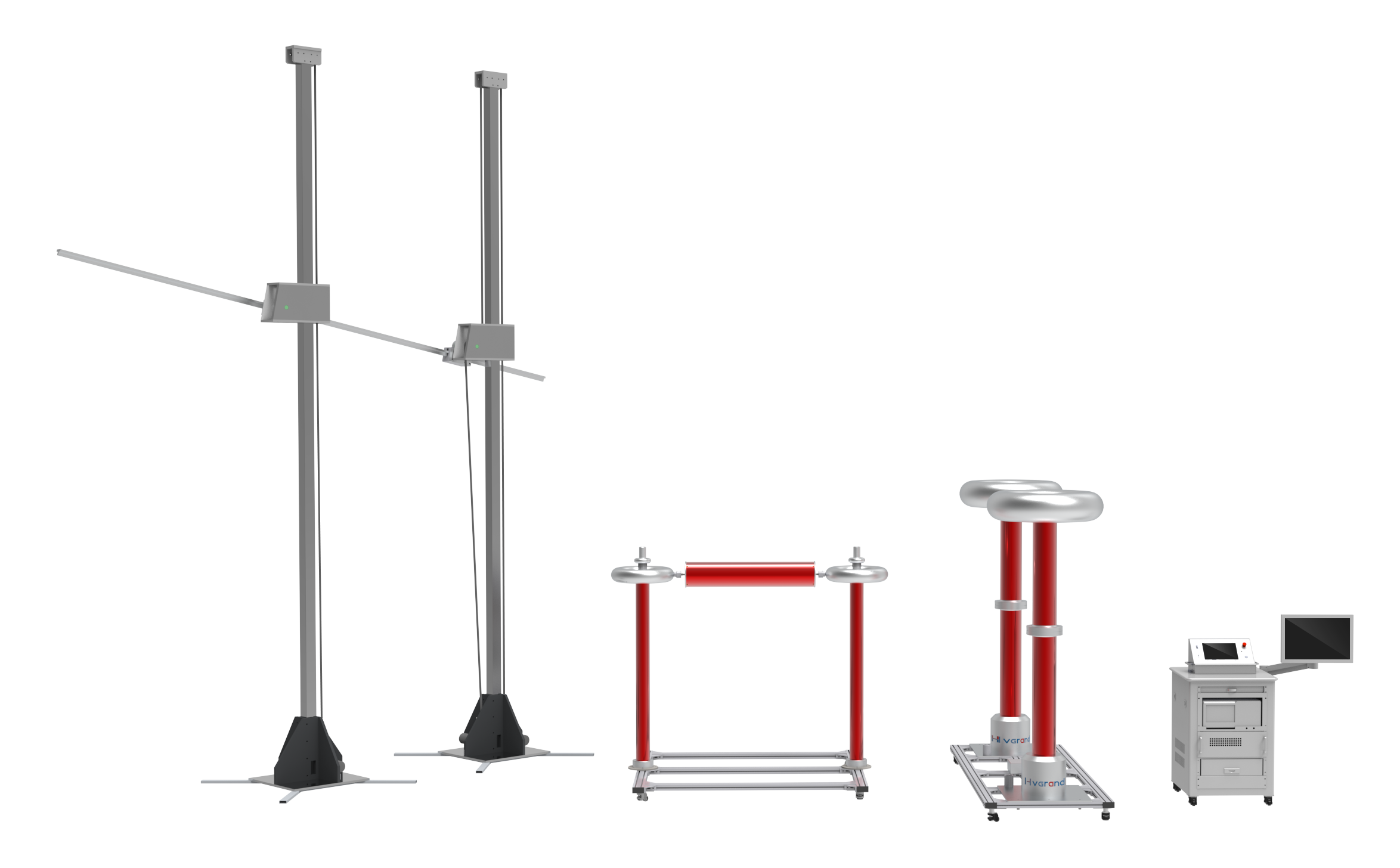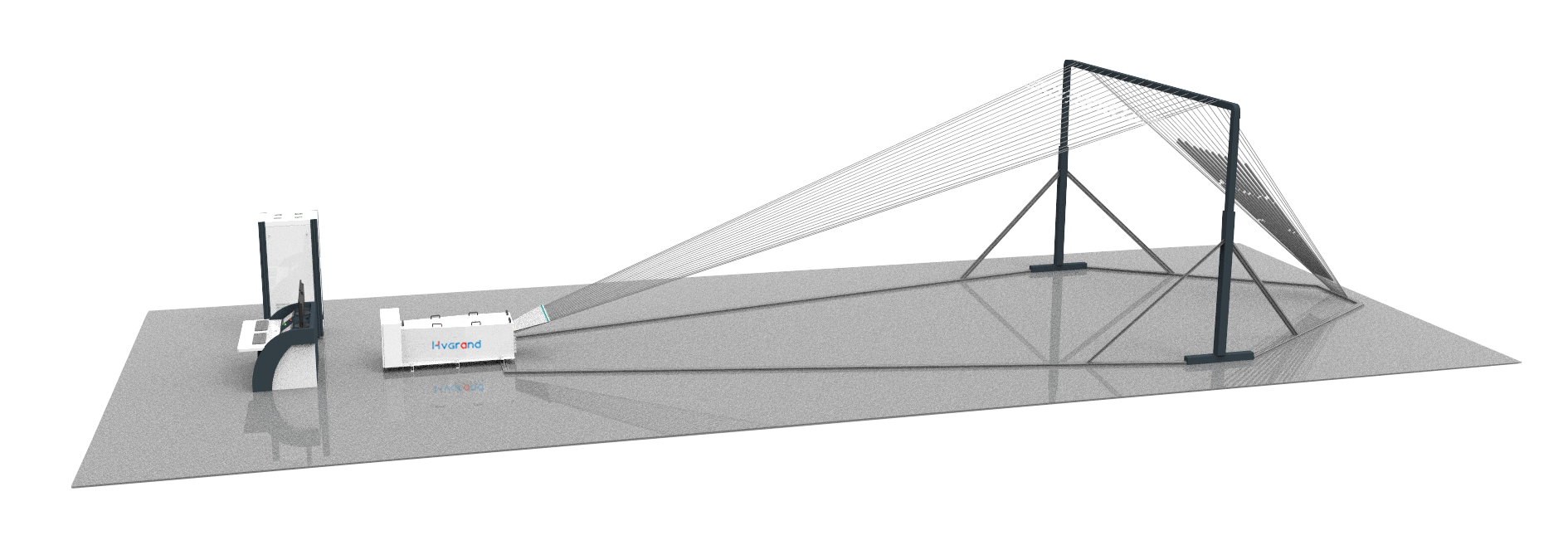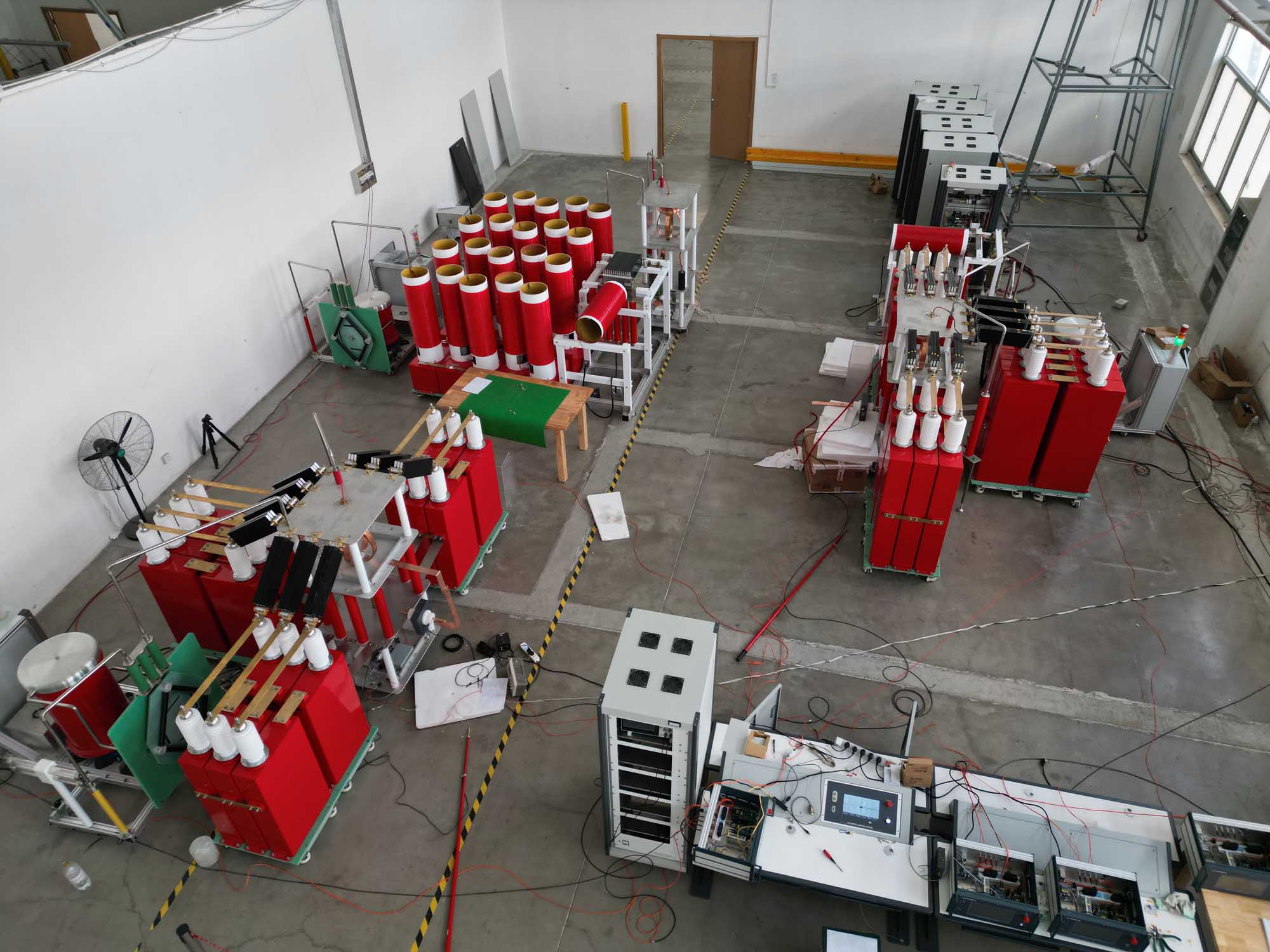
The HV Lightning Test System can perform the below High Voltage Strike Attachment Testing for lightning direct effects as per RTCA DO-160 Section 23, SAE ARP5416B Section 5, MIL-STD-464D and SAE-ARP-5412C Section 6.
Swept Channel Attachment Test (voltage waveform A).
High Voltage Streamer Test (voltage waveform B): The test can be used to evaluate possible hazards from corona and streamers which might occur in regions exposed to strong electric fields that can result in antenna degradation, dielectric puncture, or fuel vapor ignition at vent outlets or within non-conductive fuel tanks.
High Voltage Strike Attachment Test on Models (voltage waveform C and D).
Initial leader attachment test (voltage waveform D) for wing tips fabricated of nonconducting materials, radomes and large antenna fairings. The purpose of this test is to demonstrate the effectiveness of the lightning protection of exposed dielectric structures, such as radomes. Therefore, this test is normally applicable to parts of aircraft that are located in initial leader attachment regions within Zones 1A and 1B, as described in the ARP5414/ED-91.
This electrostatic discharge generator is specially designed to simulate whether an aircraft, a rocket, a missile or weapon systems can operate safely, reliably, or be damaged after being subjected to a buildup of static electricity when flying at high speed through the sky.
It has a discharge voltage of up to 300kV, in compliance with standards such as MIL-STD-464D, MIL-STD-331D, GJB1389A, GJB573A, etc.
SXESD300 is used for Helicopter-borne ESD test and High Voltage Corona.
The inductance shall be determined at a nominal 1kHz frequency.
This system is mainly used for conducting nuclear electromagnetic pulse sensitivity tests on electronic systems.
It can apply a maximum pulse electric field of 50kV/m to the test object to test its reliability in a strong pulse electric field environment.
High Current Test System is used to conduct high current physical damage testing for lightning direct effects as per RTCA DO-160 Section 23, SAE ARP5416B Section 5, MIL-STD-464D and SAE-ARP-5412C Section 6. It can output current test components A,Ah, A/5, B,C,C*,D, which can be applied individually or as a composite of two of more components together in one test.High current physical damage test is used to determine the damage that may occur to the test object during a lightning channel attachment to or near the test object.
Impulse voltage test system (Impulse Voltage Generator, HV generator, Marx generator) can be used to
generate impulse voltages simulating lightning impulse (1.2±30%/50±20%μs) and
wave D (T1:50~250±10%/T2:2000 μs) for lightning direct effects on aircrafts.